
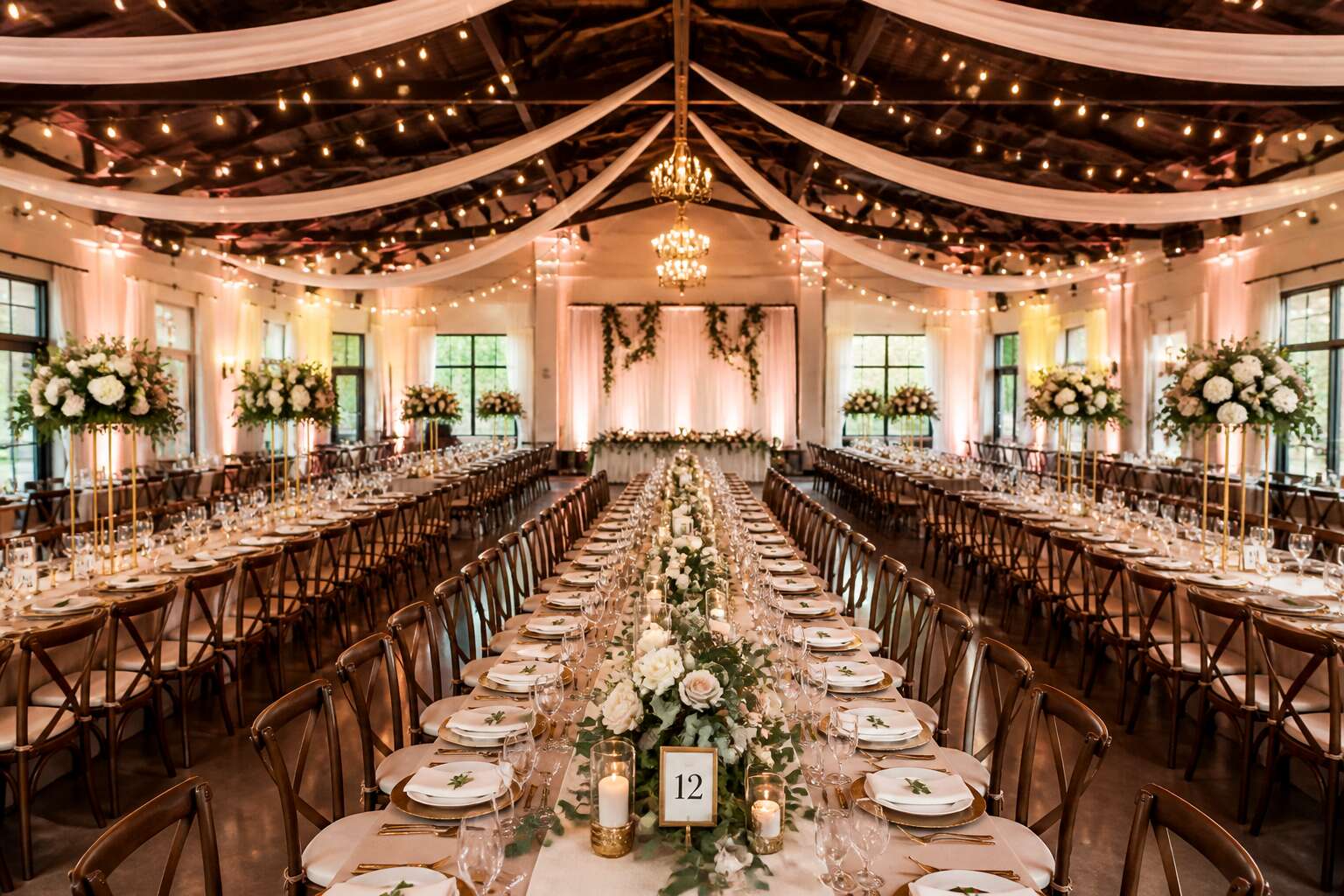
Determining Your Event Requirements
Estimating Guest Count and Space Needs
The guest count defines every other decision you will make. If your event is a venue hire for 200 people, the difference between a comfortable evening and a crowded one comes down to square meterage. Start with the confirmed headcount, then add a buffer for late RSVPs. I always recommend a third figure, the comfort threshold, which reflects how tightly you pack the room.
There are three numbers to put on the table:
- The confirmed headcount, your absolute starting point.
- The buffer count, for those last minute yeses.
- The comfort threshold, which determines whether 200 feels spacious or cramped.
Once these figures are fixed, the floor plan comparison becomes straightforward. A sit-down dinner for 200 typically requires at least one square meter per person. The square meterage per head decides whether your guests can move freely or spend the night shuffling sideways. In my experience, that single number makes or breaks the atmosphere.
Understanding Seating Configurations
Your seating chart is where the evening’s energy is truly decided. A venue hire for 200 people demands you think in rows, rounds, or cabaret style, not abstract concepts. The configuration dictates sightlines, conversation, and server access. Feet per person matters more than square meters alone.
Before you sign, grill the venue manager on chair widths and table diameters. Ask to see the actual furniture. Here is the core math you need:
- Banquet rounds of ten create maximum chatter but require wider aisles.
- Classroom or theater style packs people in for lectures, but kills dinner service.
- Long communal tables encourage mingling but limit privacy for speeches.
- Cocktail or high-top layouts need less floor space, yet demand more staff movement.
The layout dictates whether you’re hosting a slick networking event or a formal six-course feast. A banquet setup for 200 people usually consumes more floor space than clients anticipate. Meanwhile, a mixed layout can save you precious square meterage. Do not let a shiny floor plan fool you. Always request a scale drawing with the exact table sizes.
Your event’s purpose should dictate the shape of the room. A love of fine dining will force you into a stricter row structure. A focus on networking might see you prioritising open circulation paths. Which configuration forces the least amount of compromise for your group’s primary goal? Answer that, and the room layout becomes obvious.
Planning for Catering and Bar Areas
Once you have settled on the configuration, the next decision involves food and drink. A venue hire for 200 people demands you think about catering logistics before you fall in love with the chandeliers. Ask about kitchen capacity. Can the in-house team produce 200 plated meals simultaneously, or will you need external caterers? That distinction changes your entire budget!
Bar areas need equal scrutiny. A single bartender simply cannot serve 200 guests efficiently. For 200 people, I recommend at least two bars or one bartender per 50 guests. Confirm any restrictions on alcohol sales, corkage fees, and ice supply. In South Africa, also ask about backup power for the bar fridges during load shedding. The practicalities:
- Check power points for additional fridges.
- Confirm water stations for non-alcoholic options.
- Clarify waste disposal schedules.
Considering Entertainment and Stage Space
Entertainment dictates layout more than any table plan. A five piece band needs a stage footprint of around 18 square metres. Your venue hire for 200 people must fit that without pushing guests into fire exits. Sightlines matter more than most planners think. If the room is rectangular, place the stage on the short wall. That gives the maximum number of seats a direct view.
A cocktail-style mix with a DJ has different needs. No stage, but you still need a dedicated corner with a solid power supply. DJs bring subwoofers that vibrate through floors. Venues have differing soundproofing levels and noise limits for late evening sets. Some venues require their own technicians to run the in-house sound system.
For a seated dinner with speeches, the stage only needs to hold a podium and a table for awards. But you still need space for a projection screen and a throw distance of at least 3 metres. Blackout options for daytime events are another consideration.
A short checklist makes the site visit useful:
- Is the stage load-in accessible by vehicle?
- What is the floor load rating for heavy speaker stacks?
- Are there built-in truss points or free-standing supports needed?
A site visit during an active event reveals the ambient noise, the acoustics, and the view from the most distant seat. The right venue hire for 200 people balances your entertainment requirements with physical comfort.
Exploring Mid-Size Event Venue Options
Banquet Halls and Conference Centres
Planning an event for 200 people in South Africa forces a decision between banquet halls and conference centres. Each option carries trade-offs beyond square metres. Banquet halls appeal with ornate ceilings and built-in dance floors. Conference centres offer retractable walls and permanent sound systems. For any venue hire for 200 people, the true test happens during a live event, not a viewing.
- Pillar positions that block sightlines
- Sound leakage between partition walls
- Power supply capacity for additional lighting
- Emergency exit routes during peak flow
Conference centres usually manage acoustics and technical loads better. Banquet halls shine through visual atmosphere and service style. Watch how staff reset tables between courses. Then consider your specific programme.
Hotels with Flexible Event Spaces
Hotels hold a strange advantage for events of 200 people: they are already running before you arrive. A property with flexible event spaces can shift from a morning workshop into an evening reception without guests leaving the building. I have watched a Durban hotel split one large room into three breakaway spaces using acoustic partitions, then reunite them for dinner! The overnight buffer matters, too. Attendees wander upstairs and the team resets the floor between courses, no rush at all.
What I inspect before committing to a hotel for venue hire for 200 people:
- How the convention service manager responds to a detailed site inspection
- The loading dock condition, not the lobby chandeliers
- Whether house electricians can supply additional production power
Hotels rarely lead the conversation for venue hire for 200 people, yet their flexible event spaces reward careful attention over purpose-built venues.
Warehouses and Industrial-Style Lofts
Warehouses and industrial-style lofts approach venue hire for 200 people from a different direction. These spaces arrive with raw concrete, high ceilings, and exposed ducting. Your budget pays for volume and atmosphere, not lobby finishes. A Johannesburg loft can absorb 200 guests and still hold a staging area without feeling overcrowded.
What I inspect before committing to a warehouse venue:
– Whether the floor bears the weight of a seated dinner
– The ratio of bathrooms to guests
– Ambient noise leaking in from surrounding streets
– Fire escape capacity for a full crowd
The tradeoff is honest. Warehouses demand more production planning, but they reward planners who want full control over lighting and layout. For venue hire for 200 people, industrial spaces provide the freedom that purpose-built venues cannot offer.
Outdoor Gardens and Tented Spaces
Outdoor gardens offer rare flexibility for mid-size events. For venue hire for 200 people, a manicured lawn with a clear span tent outperforms a windowless hall when the weather cooperates. I have watched planners neglect rain plans, then scramble for tarpaulins on the morning of the event.
- The drainage pattern across the main lawn
- Whether tent anchors can sink in without hitting buried irrigation lines
- The nearest generator point, because load shedding waits for no one
- Neighbourhood sound rules for amplified music after dusk
That last point causes the most friction. A garden can hold 200 guests comfortably, but an open boundary lets your playlist travel further than you expect. The tent itself matters more than the lawn. A properly tensioned structure with solid flooring converts a muddy patch into a usable floor space. For venue hire for 200 people, outdoor venues live or die by that backup plan.
Golf Clubs and Country Estates
A golf club estate often appears as one continuous expanse, but the space breaks into distinct zones. For venue hire for 200 people, the clubhouse veranda, the fairway edge, and the courtyard offer separate moods within a single booking. I have watched guests move from a terrace into the dusk without realising they crossed from ceremony to reception.
- Ask whether the venue sets a minimum food and beverage spend per head.
- Confirm if mowing operations start at dawn, because that sound will end the lingering dance floor conversations.
Country estates present a different calculation. The stone barn and the walled garden often sit far apart, which demands two bars and two restroom clusters. That quiet separation can save the planner who needs simultaneous speeches and dancing.
Financial Planning and Budgeting
Rental Fees and Minimum Spend Requirements
Rental fees for venue hire for 200 people in South Africa range from R15,000 to R80,000 per evening. Yet the minimum spend often surpasses the rental fee. Many venues quote a low base rate, only to require a guaranteed R40,000 on catering and beverages. That figure can double your real cost.
Before you commit, break down the contract into these parts:
- Base hire charge
- Per person food minimum
- Damage deposit
A coastal estate might waive the rental fee entirely if you hit a high spend. I have seen planners sign for a R20,000 room only to face a R60,000 invoice after the minimum eat and drink clause activated. The venue’s optimism often conflicts with your actual guest count.
Hidden Costs and Service Charges
Beneath the quoted price for venue hire for 200 people lurks a ledger of quieter obligations. Service charges, often ten to fifteen percent, attach themselves to every drink and plate. VAT adds another fifteen percent, a shadow that swells the final invoice.
Consider the list of potential extras:
- Corkage fees for outside wine
- Overtime rates for staff past midnight
- Cleaning and breakage deposits
- Generator or power surcharges
These costs surface after the contract is signed. A venue might quote R18,000, yet the service charge alone transforms that figure. Budget for the unseen, or the unseen will budget for you.
Calculating Per-Head Food and Beverage Costs
Per-head food and beverage costs turn raw numbers into a workable budget. For venue hire for 200 people, allocate between R250 and R450 per guest, depending on menu style and bar options. This estimate covers the meal, not the venue itself.
Calculate each element separately. The protein, the starch, the garnish. The waitrons and the glassware. Every plate carries a cost. I multiply the quoted per-head figure by 1.4 to absorb VAT and service charges without surprises later.
- Canapés and starters
- Main course and sides
- Dessert and coffee
- Wine, beer, and soft drinks
Once you have the per-head figure, multiply by 200. That total becomes your negotiating floor. The venue might adjust the package, but your floor holds firm.
Deposit Structures and Payment Timelines
When you book a venue hire for 200 people, the deposit structure becomes your first real financial commitment. Most venues in South Africa ask for 50% upfront to secure the date. Some accept 30% with a signed agreement.
Cancellation policies vary, so read the clause before paying. It determines how much of that deposit you recover if plans change.
- 50% deposit on signing
- 25% due one month before the event
- 25% due on the day
The deposit might be refundable or transferable. That distinction matters. Confirm whether VAT is included in each instalment. A venue may quote a package price excluding VAT, then add it at payment time. That changes your cash flow projections.
Keep every invoice and proof of payment. When you hire a venue for 200 people, clarity on paper prevents surprises at the end.
Ways to Save on Your Overall Expenditure
Financial planning for a venue hire for 200 people rarely fails on the headline number. It fails on the hidden clauses. The rental fee might look sane, then the venue adds a mandatory cleaning charge or a corkage fee for every bottle brought in. I have seen quotes where those extras added 18% to the total.
One overlooked saving is the time of day. A Sunday morning booking costs far less than a Saturday evening. Another is the guest count buffer. Some venues allow you to confirm the final number 72 hours before. Drop it from 200 to 185 and watch the per head cost shrink.
- Ask for a payment plan that spreads instalments without interest
- Negotiate a rate for the venue’s own staff instead of hiring external security
- Request a discount for paying the full balance two weeks early
Evaluating Location and Guest Accessibility
Proximity to Public Transport and Major Roads
In Cape Town, the average commuter wastes 96 hours a year in traffic. That statistic shapes every location choice. A hall’s charm matters little if guests arrive frazzled or late. For venue hire for 200 people, accessibility becomes the deciding factor.
Check your shortlist against Gautrain stations, MyCiTi bus stops, and arterial routes such as the N1 or M1. Some venues look central on a map but suffer from bottlenecked access during peak hours. Visit at the same time your event will start.
- Distance to the nearest train station
- Dedicated drop-off zones for guests
- Parking capacity for ride-hailing vehicles
Traffic flow determines which start time works. A 6pm start might clash with the evening rush, while a 7pm slot allows a calm arrival. The right location for venue hire for 200 people reduces stress before the first toast.
Parking Availability and Valet Services
Parking availability often separates a memorable evening from a logistical nightmare. For venue hire for 200 people, the difference between a dedicated lot and street parking is enormous. Guests should not circle blocks while appetisers go cold.
Valet services can transform a constrained footprint. A venue with limited spaces becomes viable when a professional team manages drop-off and retrieval. Confirm the valet provider’s insurance and whether the cost is absorbed or passed to guests. When reviewing venue hire for 200 people, ask about the ratio of parking bays to expected guests.
Consider these parking essentials:
- Number of accessible bays for guests with disabilities
- Lighting and security for late-night departures
- Arrangements for ride-hailing vehicles to queue without blocking exits
A venue with a clear parking strategy lets guests transition from car to conversation without friction. That ease sets the tone for the entire evening.
Accessibility for Guests with Reduced Mobility
Once the parking strategy is settled, the next barrier appears at the threshold. Venue hire for 200 people succeeds only if every guest moves through the space with dignity. A flight of stairs can become an unspoken exclusion.
I once arrived at a venue where the accessible entrance was also the service entrance. Guests in wheelchairs rolled past rubbish bins just to enter. That impression lingers. Evaluate these physical details:
- Level thresholds or rubber ramps at every door
- Turning radius inside lifts and restrooms
- Clear paths that avoid cables, steps, or uneven flooring
For venue hire for 200 people, ask about evacuation procedures for guests with reduced mobility. Staff should know how to assist without embarrassment. Check the gradient of any slope, because a gentle incline in sunshine becomes a cruel climb in rain. These choices define the evening more than the décor ever will.
Assessing In-House Services and Facilities
In-House AV Equipment and Technical Support
When you evaluate a venue hire for 200 people, the in-house AV equipment and technical support deserve the same scrutiny as the floor plan. I have watched events stumble because a microphone died or a projector lagged, and the cause was usually a venue that underinvested in its technical infrastructure.
Walk the space and test the equipment yourself. Ask whether a technician stays on site for the full duration or merely sets up and leaves. Check if the sound system is zoned for different seating layouts, and whether the lighting can be dimmed independently.
- Confirm the number of wireless microphones and their signal range
- Ask about backup generators or uninterruptible power supplies
- Request a technical rehearsal in the actual event room
Some venues bundle these services into the rental package, removing the stress of coordinating external suppliers. For venue hire for 200 people, reliable in-house AV support often separates a smooth programme from an awkward pause while someone climbs a ladder.
Furniture and Styling Inclusions
For a venue hire for 200 people, furniture and styling inclusions shape the room as much as the floor plan. Some venues supply only basic chairs and folding tables. Others maintain a full inventory of banquet rounds, chiavari chairs, and lounge pieces that convert a conference hall into a celebration within the hour.
I inspect the actual furniture, not the brochure! Scratched surfaces and faded linen become obvious once 200 guests are seated. Confirm whether candle holders, vases, or signage frames come with the package.
- Check the furniture quantity against your final guest count
- Verify the condition and colour of linen and chair covers
- Clarify which styling items are included rather than billed as extras
A clear inventory prevents last-minute rentals and surprise labour fees. The furniture catalogue determines whether the space works on the day itself.
On-Site Coordination and Event Management Teams
When you’re organising a venue hire for 200 people, the quality of the on-site coordination team can make or break the event. I always ask who will be present on the day and what their authority includes. A dedicated event manager can resolve a catering delay or a lighting fault in minutes, whereas an absent contact turns small issues into disruptions.
Check whether the venue provides a single point of contact or a full operations crew. Also confirm their response times and whether they manage external suppliers.
- Who leads the on-site team during your function?
- Do they handle setup, breakdown, and emergencies?
- Is there an additional fee for their services?
The best venues treat their staff as part of your event, not just hired help. For a venue hire for 200 people, this layer of support is invaluable.
Kitchen and Catering Capabilities
When scoping a venue hire for 200 people, the kitchen and catering capabilities deserve close scrutiny. I once saw a beautiful hall fail because its tiny catering kitchen could not plate a three course meal for a large crowd. Ask direct questions. Does the venue operate a commercial kitchen with cold storage and prep space? Can their team serve 200 meals on time? Some venues require in house caterers, which simplifies logistics but limits menu freedom. External caterers may be allowed, yet you must confirm the kitchen complies with health regulations for that scale.
Consider these points on your walkthrough:
- Adequate refrigeration and cooking capacity.
- On site crockery and cutlery for 200 guests.
- Backup power for kitchen equipment.
A venue that answers clearly will deliver a seamless culinary experience. The right venue hire for 200 people includes a kitchen that works quietly behind the scenes.
Finalising Your Booking Confidently
Reviewing Contracts and Liability Insurance
Only 38% of event hosts review their venue contract clause by clause before signing. For a venue hire for 200 people, the fine print becomes your shield. Liability insurance deserves equal attention. It protects you when a guest spills wine on a rented sound system or trips over a speaker cable.
- Cancellation terms and force majeure provisions
- Damage deposit refund conditions
- Maximum occupancy and noise restrictions
Compare the venue’s public liability cover with your own event insurance. A signed contract with verified insurance details transforms an anxious payment into a confident booking. The review process itself reveals whether the venue operates transparently or hides surprises in dense wording.
Understanding Cancellation and Rescheduling Policies
Finalising a booking for a venue hire for 200 people hinges on how well you understand the cancellation and rescheduling policies. I have watched hosts assume their deposit secures flexibility, only to discover that postponing a corporate function or wedding means paying the full balance.
Before you make the final payment, examine what the contract says about date changes. Check whether rescheduling transfers your deposit to a new date or starts an entirely new agreement. Review the notice periods and any penalties attached to each scenario. A concise checklist keeps the process honest:
- The number of days required to cancel without penalty
- Whether dates shift once at no cost or each change incurs a fee
- The venue’s obligations if they are forced to close on your day
For a venue hire for 200 people, deposits often reach significant figures. Reading these terms carefully ensures the final payment reflects what you actually agreed to, not what you assumed.
Scheduling a Site Visit or Tasting Session
A site visit changes everything. I have seen venues that looked perfect online turn out to have awkward columns or a noisy kitchen wall. When you are committing to a venue hire for 200 people, the stakes are high. Schedule your walkthrough at the exact time your event would run! That reveals natural light, rush hour noise, and how the space feels when it is alive.
For the tasting session, bring your final guest count and your per-head budget. Ask to see the exact dishes you plan to serve, not a premium sample. Check portion sizes and how the kitchen handles dietary requests. Then verify these details:
- The same staff will serve on the day
- The bar pour sizes match your package
- There is a plan for guests with allergies
Your venue hire for 200 people should feel right in person, not just in a brochure.
Confirming Load-In and Set-Up Timings
Finalising your booking is the moment the venue hire for 200 people shifts from possibility to plan. The signature, however, is only the beginning. You still need to pin down load-in and set-up timings with the venue manager.
Ask for the exact minute your suppliers can enter the building. Confirm when the kitchen can fire up, when the bar can be stocked, and when the sound check can happen. These details affect the entire rhythm of your event.
- The arrival slot for AV and staging crews
- The delivery window for tables, chairs, and decor
- The deadline for any vendor access on the day
I have seen events succeed or stumble based on a fifteen minute variance in load-in. Get the timings in writing, in the contract, before you pay the final deposit.
Checking Corkage and Vendor Restrictions
Finalising your booking confidently means more than signing the dotted line. For any venue hire for 200 people, you must scrutinise the fine print around corkage and vendor restrictions. Corkage fees can add a surprising amount to your bar bill if you plan to bring your own wine. Ask for the exact per-bottle charge and whether it applies to all beverage types.
Vendor restrictions often dictate which caterers, florists, or AV technicians you can employ. Some venues mandate their in-house teams, while others allow external suppliers with prior approval. Before you commit, check:
- Whether external vendors pay a surcharge
- If there are preferred supplier lists
- The deadlines for submitting vendor insurance certificates
Understanding these constraints early prevents last-minute surprises and keeps your budget intact. A venue that seems affordable on paper can quickly become costly when hidden vendor rules surface.
Securing Your Date and Payment Terms
Once you have untangled the corkage fees and vendor policies, the only task left is to make it official. Your date is only truly secured once both parties have signed and the holding fee is paid. Verbal assurances, even from a charming events manager, do not reserve a Saturday night in high season. For any venue hire for 200 people, confirm which payments are non-refundable and which can be moved if your plans shift.
Ask specifically about the timing of the final balance. Many venues require full payment 30 days before your event. Some allow a 50% split closer to the date, but that negotiation happens before you sign, not after. Once you transfer the holding fee, request written confirmation with a unique reference number for your records.
Before you part with money:
– Confirm the fee deducts from the total bill.
– Check the payment methods accepted, whether EFT, credit card, or direct deposit.
– Request a short grace period after your site visit to reconsider.


0 Comments