
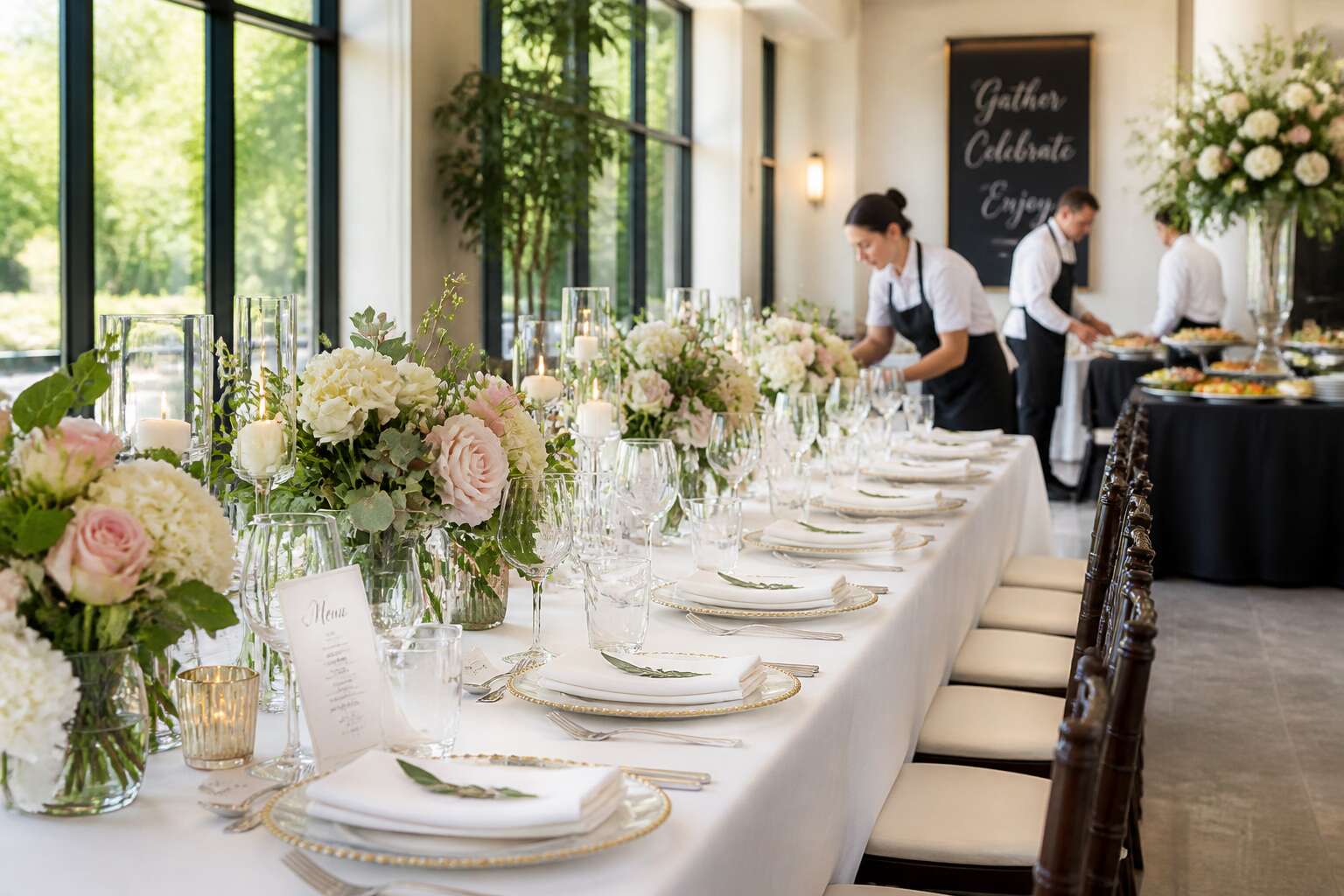
Choosing the Perfect Event Space
Key Factors to Evaluate Before Booking
When guests step into a space, they feel the weight of a hundred small decisions before the first course arrives. In South Africa, where the landscape itself sets a dramatic stage, the venue must carry its own presence without overwhelming the occasion. Consider time of day for your gathering. Morning light flatters certain interiors while evening events demand a warmth that only well placed lighting can provide. Layout matters as much as aesthetics. A room that cannot accommodate the natural flow of dining and movement will betray even the most exquisite menu. Before you commit to any property, ask yourself how the architecture will serve the hours a guest actually spends there.
Practical elements require equal scrutiny. Understand what the venue provides and what arrives separately, particularly when organising venue hire and catering. This distinction shapes your budget and your timeline.
– Sound insulation and ambient noise levels
– Access for deliveries and service staff
– Restroom facilities and their condition
– Backup power provisions for evening functions
Weather in this region can shift without courtesy. An open terrace is glorious until the wind arrives. Speak with the operations manager about alternative plans for inclement conditions. Their response reveals how they handle pressure. The most beautiful room becomes a failure if service staff cannot navigate it efficiently between courses. Look behind the scenes, not just at the polished photographs. A venue that hides its kitchen from scrutiny often hides more than smells. Food service logistics determine whether your event feels seamless or strained. Choose a partner who treats your occasion with the seriousness of their own reputation.
Location, Accessibility, and Parking
The approach to a venue writes the first line of its story. Guests judge a property long before they reach the threshold. A gravel road that winds through ancient trees builds anticipation. A congested city street, scarred by potholes, sets a different tone entirely. Consider the psychological weight of the final mile. If guests must navigate confusion to find the entrance, their mood suffers before the first glass is poured. The geography of arrival matters as much as the architecture of the hall.
Parking carries a silent gravity. A gravel lot that floods after rain, a street with limited bays, a security gate that causes delay. All of these become part of the evening’s texture. Observe the venue’s physical position in the wider landscape of the city. Proximity to main arterials assists guests who travel from afar. A remote location offers privacy but demands clear directions. When planning venue hire and catering, the logistics of getting people in and out of the space often determine the success of the entire affair.
Accessibility dictates a specific, unforgiving checklist:
– The distance between the parking area and the main entrance
– The presence of ramps or steps for elderly guests
– The condition of pathways after sundown
– The availability of secure, well-lit walking routes
These factors are not administrative details. They are the quiet infrastructure of an evening that feels effortless. When guests struggle to find a place to leave their car, or fear for their safety in a dark corner, the romance of the evening begins to corrode. The most remarkable venue hire and catering plans cannot compensate for a difficult journey home.
Capacity and Layout Flexibility
The moment a guest steps through the door, the arithmetic of the evening begins. A room designed for two hundred bodies will betray itself when asked to hold three hundred souls, and the reverse holds equal truth. A cavernous hall swallows the intimacy of a fiftieth birthday like a desert consumes rain. The first question is always numerical, yet the answer hides in the geometry of movement, not mere seating.
Capacity is a promise of comfort. Tables require breathing room, caterers require corridors, and dancers require a clearing that feels discovered, not manufactured. A flexible layout transforms the same square meters into a theatre, a banquet, or a jazz lounge without shifting a single wall. The true measure of a venue lives in its willingness to shape itself around your narrative:
– Movable partitions that vanish when the mood turns festive
– Furniture that rearranges in minutes, not hours
– Lighting zones that carve separate moods from one open space
– Power points placed where the band, the screen, or the coffee cart might land
What often escapes the planner’s eye is the quiet rhythm of behind-the-scenes traffic. The service staff need their own paths, the kitchen needs its silent relay, and the cloakroom needs its patient ebb and flow. A space that ignores these undercurrents will choke on its own elegance. When you assess venue hire and catering options, watch how the room breathes during a busy moment, not just how it poses for photographs.
The finest spaces offer a chameleon’s grace. They permit the morning seminar to dissolve into the afternoon feast, and they let the evening’s final guests linger without feeling the cold pressure of cleaning staff waiting in the wings. Seek a floor plan that grants you authorship. The venue is the parchment; your event is the ink, and the layout determines whether the story reads clearly or dissolves into cramped confusion. For venue hire and catering, spatial flexibility is not a luxury. It is the quiet engine that turns a gathering into a memory.
Navigating Catering Menus and Dietary Needs
Catering Styles: Buffet, Plated, and Family-Style
The true test of your event’s success often lies not in the guest count, but in the delicate choreography of the meal. Choosing between a plated dinner, a lavish buffet, or a bountiful family-style spread dictates the entire atmosphere of your gathering. A plated affair signals formality and precision, while a buffet invites a more fluid, exploratory mood. This decision fundamentally shapes the venue hire and catering experience, as it dictates the spatial flow and service requirements. You must match the culinary presentation to the energy you wish to cultivate, ensuring your guests feel neither over-managed nor adrift.
Navigating dietary requirements has evolved from a polite aside to a critical component of modern hospitality. The days of offering a single sad vegetarian option are over. You will now encounter guests with allergies, ethical preferences, and medical conditions that demand your attention. This often requires a dance between the kitchen and the front of house to ensure every plate is safe and delightful. To manage this effectively, consider the common pitfalls:
– Food allergies that are severe and require cross-contamination protocols.
– Intolerances such as lactose or gluten, which may not be life threatening but are deeply uncomfortable.
– Ethical choices like veganism or pescatarianism, which are philosophically motivated.
– Religious observances, such as halal or kosher, that dictate specific preparation methods.
A skilled venue coordinator will treat this list not as a constraint, but as a blueprint for a tailored menu. The real magic occurs when you enquire about a cuisine that eschews meat or dairy entirely, often revealing the most creative and flavourful dishes on offer. Ultimately, the best events are those where a guest with a complex dietary profile feels just as considered as the most uncomplicated carnivore. By prioritising this nuance, you elevate the entire venue hire and catering experience from a simple meal to a memorable occasion of genuine care, rendering any generalised menu obsolete.
In-House vs. External Caterers: Pros and Cons
I’ve watched a beautiful menu fail because the external caterer couldn’t plug in their gear. That is the real cost of going solo. In-house teams know every fuse box and water point. Their advantage lies in familiarity, not necessarily in a superior dish. External caterers, however, can offer a bespoke experience that a venue’s standard package rarely matches. For venue hire and catering, the decision is a balancing act.
- Is the external caterer insured against kitchen accidents?
- Does the venue charge a kitchen rental fee?
- Will the venue allow a tasting session before you commit?
A transparent coordinator will answer these without hesitation. That makes all the difference.
Customizing Menus to Match Your Theme
A menu is a promise. Ignoring dietary needs breaks that promise before the first course is served. In South Africa, where food is central to celebration, this matters deeply. Match your menu to your theme, but never sacrifice individual requirements for aesthetic perfection.
When you secure venue hire and catering from a single provider, you gain a crucial advantage. The kitchen team already understands the flow of the event. They can adapt their dishes to your narrative, whether that means a braai-inspired spread for a rustic wedding or a sleek, plant-based affair in a city loft. The practical side involves clear requests.
– Check for gluten-free and Halaal options upfront.
– Confirm how cross-contamination is managed in the kitchen.
– Ask if vegan alternatives are cooked in a separate space.
– Enquire about nut allergies and traceability of ingredients.
A bespoke menu should not be a source of anxiety. Ask the venue coordinator to guide you through the kitchen’s limitations. This is where a cohesive package shines. The coordinator has worked with these dishes and these chefs daily. They know what the kitchen can achieve, and more importantly, how they can bend the rules to fit your theme without compromising safety. That transparency is the real value of venue hire and catering that operates as one unit.
Accommodating Allergies and Dietary Restrictions
Nearly 40% of South Africans report some form of food intolerance, yet many menus remain silent on the subject. When you secure venue hire and catering from one provider, the kitchen’s memory becomes your shield. I have seen events where a single mislabelled dish turned a celebration into a vigil. The answer is not to avoid asking, but to ask with precision.
- Request allergen matrices before tasting.
- Demand to see the fryer oil’s lineage.
- Ask about airborne risks like nut dust.
Allergies are not a trend. They are a contract between you and your guests. The right venue hire and catering team will treat that contract as sacred, mapping every ingredient to its source. In this country, where food carries memory, that care is the difference between a feast and a funeral.
The Importance of Food Tasting Sessions
A tasting session is where venue hire and catering promises meet reality. In my experience, the plate reveals what the proposal conceals. Seasoning levels, portion sizes, and serving temperatures surface during these sittings.
Test three dishes across different courses. Texture matters. A curry that tastes vibrant on day one may dull under chafing dish heat. Ask how each plate behaves thirty minutes after leaving the kitchen.
Here is what I evaluate:
- Flavour strength at room temperature
- Presentation under event lighting
- The team’s response to critique
That response tells you more than the recipe. A team that accepts feedback will treat your guests with the same attention.
Understanding Pricing and Hidden Costs
Per-Head Pricing vs. Package Deals
Every per-head price looks reasonable until the itemised extras arrive. The venue hire and catering quote often lands 20% higher than the advertised base rate. I have seen quotes where those extras doubled the price.
Per-head pricing rarely includes everything. You will typically see:
- Service charge from 10% to 15%
- VAT at 15%
- Corkage per bottle
- Cakeage per slice
- Overtime for staff past midnight
Package deals bundle venue hire and catering into a single price. They simplify comparison, but commit you to services you may not use. Minimum head counts, gratuity percentages, and overtime rates vary between venues. Two venues with identical package prices can produce wildly different final invoices.
Service Charges, Gratuities, and Taxes
Every glamorous celebration depends on precise figures. The advertised rate for venue hire and catering is rarely the sum you pay; service charges, gratuities, and taxes arrive with their own demands. In South Africa, VAT at 15% sits on top of everything, but the service fee often remains separate, money that never reaches the staff who poured your champagne.
- Service charge: commonly 10% to 15%, calculated on the catering subtotal
- VAT: mandatory 15%, applied to the venue hire and catering base
- Gratuity: the true tip, usually discretionary but heavily implied
The compounding surprises are what catch planners off guard. I have watched invoices where the service charge was levied on the VAT amount itself, a doubling effect that no brochure ever mentions. Ask your venue whether gratuities are pooled or house-kept, because that single answer can shift your final bill by thousands!
Rental Fees, Minimum Spends, and Deposits
Rental fees rarely include the full picture. Linens, glassware, and staging arrive as separate line items on your final invoice. Minimum spends shift the burden onto your menu, so a smaller guest count might still demand premium packages. Deposits secure the date, but some are non-refundable by design.
- Delivery and setup charges
- Cutlery and tableware
- Cleaning or breakdown fees
A detailed quote that itemizes every cost is rare. The advertised venue hire and catering package is only a starting point. When comparing venue hire and catering options, the brochure price hides the real numbers. Those extra line items often determine whether your budget holds or breaks.
Corkage, Equipment, and Staffing Extras
Corkage policies in South Africa can quietly reshape your venue hire and catering budget. Many venues charge per bottle, and the fee escalates if you bring your own wine. Some even require you to use their sommelier, which adds a staffing line you didn’t anticipate.
Equipment costs follow a similar pattern. A venue hire and catering quote might cover tables and chairs, but not the PA system, generator, or extra fridges for perishables. I’ve seen bookings where the lighting rig alone added 15% to the final bill!
Staffing extras also appear:
- Bartender fees per hour
- Security for events beyond a certain size
- Kitchen porter charges for late cleanups
Every line item deserves scrutiny. The package that looks economical on paper might look different after you review the full breakdown.
Coordinating Logistics and Timelines
Creating a Run-of-Show Schedule
Most event planners underestimate the time required for setup by at least 30%. That miscalculation creates a domino effect. It pushes back service times and leaves guests waiting at empty tables. Proper coordination between venue hire and catering starts weeks before the actual event.
The venue coordinator and the catering manager must work from the same document. This means sharing floor plans, kitchen access times, and staff arrival schedules. A delivery van blocked by a late-loading truck ruins the entire sequence. Communicate the load-in window clearly to both teams and confirm it in writing 48 hours prior.
This is where the run-of-show schedule becomes your central tool. It is a minute by minute breakdown of every task. It should not be vague. Write down when the bar opens. Write down when the first course hits the table. The schedule forces clarity and prevents the awkward question of who is responsible for what.
A solid timeline covers the following phases:
1. The site access period for caterers to unload equipment.
2. The time allocated for table setting and decoration.
3. The exact moment the kitchen service window opens.
4. The sequence for clearing plates and managing meal transitions.
The run-of-show is not just for the vendors. Your own team needs it to understand the pace of the evening. If the speeches run long, the caterer needs to know instantly. The schedule is a living document, so assign one person to hold the master copy.
The best events feel seamless because the clock is managed aggressively behind the scenes. By aligning your venue hire and catering logistics around a shared timeline, you turn a complicated operation into a fluid sequence. The guests simply see food arriving and the room moving forward, but the machinery underneath is precision engineered. That is the result of careful planning and a strict adherence to the clock.
Vendor Coordination and Communication
The quiet hours before an event are when the real work happens. A venue hire and catering partnership only survives the dinner rush if someone has already interrogated every assumption. Who owns the master key to the loading dock? What time does the security guard finish their shift? These details will haunt you if left unanswered.
I once watched a coordinator resolve a cold-food crisis by simply walking the caterer through the venue’s service corridor fifteen minutes before doors opened. That walkabout solved what three email chains could not. The physical spaces, the gaps between them, are where plans come to die.
Vendor coordination requires a meeting with the lead contractor, not just the sales reps. The people who actually load the trucks and stack the chairs need to hear the timeline from your mouth. If they misunderstand the schedule, no contract will save you.
– Confirm each vendor’s point of contact for the event day.
– Share the venue’s security and access protocols directly with drivers.
– Exchange mobile numbers between the kitchen manager and the venue duty manager.
The chaos is always in the handover. The caterer leaves the room, the venue staff resets it, and no one knows who sweeps the floor. Agree on the boundaries of responsibility before the first plate is laid. This precision is what separates a memorable function from a logistical miracle. The best venue hire and catering teams treat every Saturday like a military operation, and the guests never know the difference.
The communication rhythm should tighten as the date approaches. Weekly calls become daily WhatsApp messages. The final schedule should be a shared digital document, constantly updated and visible to every stakeholder. A stray power outage or a burst water pipe in the kitchen alters the entire dance. The caterer needs to hear about that glitch from you before they find a flooded storeroom. Anticipation is the only currency that matters here, and you are the broker.
A common failure point is the timing of the load-in itself. City traffic or a delivery window that clashes with another function can derail the whole sequence. For South African venues, especially those in central business districts, the loading bay is a contested resource. Bribing the security guard with a coffee and a firm handshake often works better than a formal email, but do not rely on it. Book the bay, confirm the booking, and then confirm it again. The caterer’s truck should never be the one circling the block while the soup goes cold.
The interpersonal friction between venue management and external catering teams is real. Different companies, different cultures, and a shared space can cause sparks. Your role is to diffuse that tension before the first guest arrives. Introduce the heads of each team personally. A simple handshake can dissolve a week of tense correspondence. When the venue manager knows the caterer’s name, they will move faster to help on the night. That human connection is a tool you should sharpen relentlessly.
Ultimately, the venue sets the stage and the caterer provides the performance. Without a shared script, you get an improv show. With one, you get a standing ovation. The coordination is the invisible architecture of a successful event. It is the bricolage of service, the patchwork of professions working in rhythm. The effort is immense, but the seamless result looks like pure magic to your guests.
Setup and Breakdown Windows
Setup windows in South African venues are rarely generous. A venue hire and catering schedule must fit between the previous function’s end and the first guest’s arrival. Tables must be dressed before the audio technician tests the microphones. Every minute lost to indecision is a minute stolen from dinner service.
Breakdown is setup in reverse, but with less adrenaline. The crew is tired and the night shift is waiting to reset the room. Confirm the breakdown window in writing, then confirm it again.
The sequence of operations should be agreed in advance:
- The caterer clears the kitchen and service areas
- The venue reclaims the floor and furniture
- The waste team handles all bins and refuse
When these boundaries are explicit, the entire venue hire and catering process turns over without friction. The next function begins on schedule.
Contingency Planning for Weather or Emergencies
Summer thunderstorms in Gauteng can flip a marquee in minutes. Your venue hire and catering timeline should include a decision point: when does the outdoor reception move indoors? Agree on this before the first guest arrives, not while your appetisers are getting soaked.
A power failure is a quieter disruption. The caterer needs to know which plugs run off the generator, and the venue needs to know which equipment the caterer can switch off. That conversation belongs in the planning session, not the crisis.
Emergency contacts form the structure of any contingency:
- the venue manager’s after hours number, not just the office line
- the catering contact who can authorise menu changes on site
- the technician on standby for load shedding or generator faults
A contingency plan removes the mental load of the unknown. People can handle rain or darkness, but they cannot handle ambiguity. With these details fixed, the venue hire and catering sequence continues with confidence.
Managing Guest Flow and Seating Transitions
The seam between canapés and seated dinner is where logistics live or die. Coordinating logistics and timelines means telling the venue hire and catering teams exactly when the last snack leaves the tray. A room that shifts from mingling to dining needs a sequence, not a suggestion. Managing guest flow starts with knowing where people naturally gather, then placing the bar away from the kitchen pass so servers can move without threading through crowds.
Seating transitions work best when the venue hire and catering staff know their cues. For a plated menu, stagger the call to tables by zone. For family-style, seat the table completely before the first platter arrives. The transition breaks when guests hover near their chairs, so give them a reason to sit: water poured, bread on the table, a short welcome from the host.
1. Announce the move five minutes early.
2. Direct the last bar queue toward the seating area.
3. Station one staff member at each service door.
A smoother transition means the food arrives at the right temperature and the room stays calm. The timeline holds because everyone watches the same clock, not the same crowd.
Post-Event Cleanup and Debrief
“Cleanup is the last story the venue tells,” a seasoned events manager once told me, “and it is a tale of either respect or expiry.” The final hours of your event are a silent audit of your planning. The energy of the guests fades, but the physical labour of deconstruction begins. Your agreement with the venue hire and catering team must specify the exact breakdown window, not just the start time. Understand who is responsible for removing linens, surplus food, and recycling stations. A clear demarcation of duties prevents friction when staff are exhausted and the clock is ticking.
The debrief forces honesty about the gaps between expectation and reality. Gather your notes while the sequence is still vivid in your mind. Did the bar flow as planned? Were the dietary restriction labels visible? Review the invoice against the original quote with a critical eye, as hidden costs often surface in the storm of teardown. Document the inefficiencies, the bottlenecks, and the moments of grace.
– Confirm all hired equipment is accounted for before the truck departs.
– Reconcile the final headcount with the per-plate billing.
– Collect feedback from the venue hire and catering staff on what they observed.
That last conversation informs your next project, turning raw experience into practical knowledge.
Elevating the Guest Experience
Themed Decor and Ambiance Enhancements
A significant shift in event planning has moved the focus from simply filling a space to creating an immersive atmosphere. Themed decor and ambiance enhancements now play a pivotal role in how guests perceive and remember your event. In South Africa, this means moving beyond generic draping and embracing the unique textures and light of our local environment. When you explore options for venue hire and catering, the sensory experience should be a primary consideration, not an afterthought. A room with strategic lighting and thematic elements sets the stage for the culinary journey to follow.
The clever use of ambiance directly impacts how food and drink are enjoyed. A well-chosen colour palette or an outdoor setting under the stars can complement the cuisine. For a more immersive feel, consider these elements to elevate the dining experience:
– Layered lighting that transitions from vibrant to intimate as the evening progresses.
– Local flora and indigenous decor elements that tie the venue to its surroundings.
– Acoustic planning to ensure ambient sound enhances conversation without overwhelming it.
The interplay between the visual environment and the catering is a delicate balance. A starkly lit room can make even a gourmet plated dinner feel sterile, while thoughtful styling, such as textured table linens and glowing candles, makes a buffet feel generous and inviting. This relationship is financially and logistically significant when you are budgeting for venue hire and catering. Savvy planners know that a touch of theatrical presentation, such as a live carving station set against a dramatic backdrop, adds a layer of entertainment that guests discuss for years. Ultimately, the goal of themed decor is to create a cohesive narrative that supports, rather than competes with, the exceptional culinary offerings.
Interactive Food Stations and Live Cooking
There is a primal satisfaction in watching a chef sear, flambe, or carve right before your eyes. Live cooking stations turn a meal into a performance, where the sizzle and aroma build anticipation before the first bite. When evaluating venue hire and catering, consider how these stations reshape the rhythm of your event. Guests are no longer passive recipients; they become curious observers, even collaborators.
Consider the practical flow:
- A grill station that allows guests to choose their cut and sauce
- A pasta toss where the chef finishes each plate to order
- A dessert crepe station that offers theatre during the sweet course
This interaction adds a layer of spontaneity that plated service cannot replicate. I have seen a quiet crowd come alive around a live sushi counter, asking questions and sharing tastes. The food becomes a conversation starter, and the cooking itself elevates venue hire and catering from logistics to experience.
Entertainment and Engagement Ideas
An event without an undercurrent of mystery loses its hold on the imagination. I have walked into ballrooms where the dim lighting changed the timbre of every conversation. Entertainment should not fill silence; it should create a second layer of the evening.
Consider a roaming violinist who drifts between tables, or a fortune teller who reads the residue of a wine glass. These moments work best when they feel unplanned, almost spectral. Guests remember the surprise more than the schedule.
- A silent theatre troupe weaving through the crowd
- A living statue stationed near the bar
- A vinyl DJ fading in and out of the night’s hum
When you align these touches with your venue hire and catering choices, the space becomes a character in your story. The food and sound begin to speak the same language.
Thoughtful Seating Arrangements and Placements
Seating placement shapes the evening. I have walked into venues where a table beside the serving station became the most comfortable seat in the room, while a row near the fire exit stayed empty until the final course. Thoughtful arrangement directs attention without announcement. The view matters as much as the chair. In venue hire and catering, the floor plan determines how guests interact with one another and with the staff. Consider the sightlines towards the bar, the kitchen pass, and the entertainment zone. Small adjustments change the energy considerably:
- Angle corner tables to face the room’s focal point
- Leave generous pathways between clustered seats for waiters
- Position quieter guests near seasoned conversationalists
The best venue hire and catering teams refine these details together, so the service and the conversation proceed without interruption. When the room supports that flow, the evening carries itself. That is the mark of a considered event.



0 Comments